Account discovery
Translate a natural-language ICP into firmographic filters, exclusions, and a manageable research set. Operators can challenge each criterion before the run expands.
Bardeen turns an operating brief into a sequence your team can inspect: account discovery, role mapping, enrichment, evidence review, and a deliberate handoff. The workflow is agent-native, but control remains with the operator.
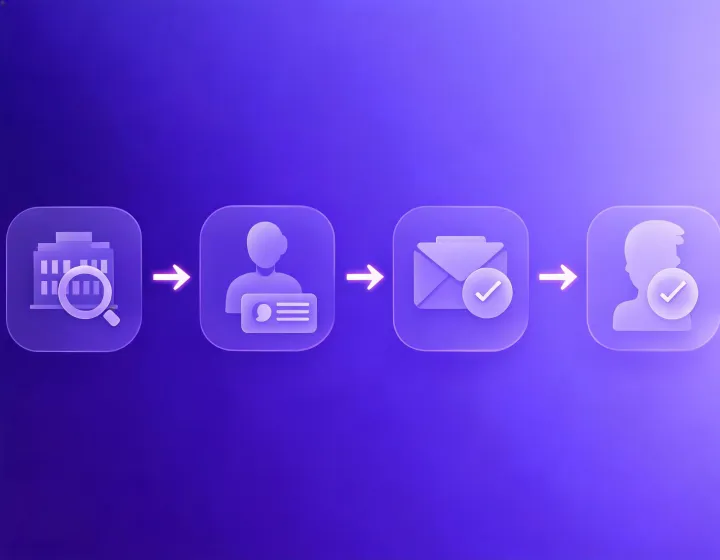
Translate a natural-language ICP into firmographic filters, exclusions, and a manageable research set. Operators can challenge each criterion before the run expands.
Identify relevant buying roles and distinguish likely evaluators, influencers, and owners instead of treating every title as equivalent.
Resolve missing business data through configured sources while retaining status and provenance signals for later review.
Use account evidence to draft contextual outreach, then hold every draft at a human-in-the-loop approval gate.
Operational evaluation starts with a reproducible task: define one buying role, one geography, an explicit company-size range, and a maximum result count. Record the provider configuration, run the task, then inspect returned evidence and unresolved fields. Repeat the same brief after a controlled change to learn whether the difference came from criteria, provider behavior, or agent reasoning. This creates useful local evidence without inventing universal performance claims.
Records expose what was found, what remains unresolved, and which data needs operator confirmation.
Research completion does not equal permission to send; the workflow preserves that boundary.
Approved outputs can move into downstream tools without losing the reasoning that shaped them.
Coverage, match rate, latency, and bounce outcomes depend on configured providers and must be measured in your environment.
Copy the command, run it in your environment, configure approved credentials, and verify a narrow first result.
npx -y @okki-global/okki-go-taroball